A spring delivery of 1 million bees
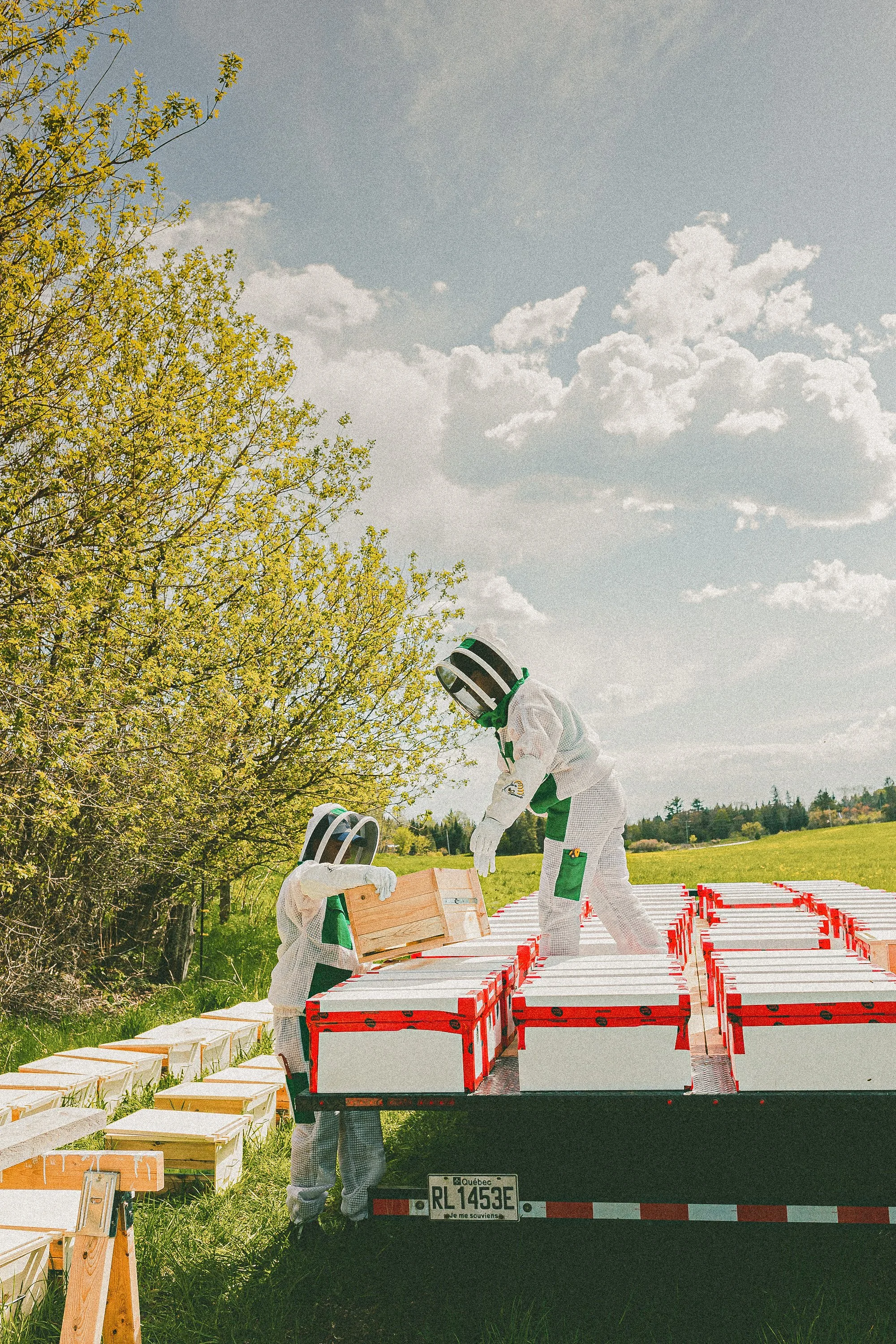
A package of bees, if you have never seen one, is a small wooden-and-screen box about the size of a file box, containing roughly 10,000 worker bees and a single mated queen in a tiny cage of her own.
I drove up from Montréal in the dark to catch the unloading. There is a particular sound a flatbed full of bees makes when you pull up next to it — a low, distributed hum, like a refrigerator the size of a building. You feel it before you hear it.
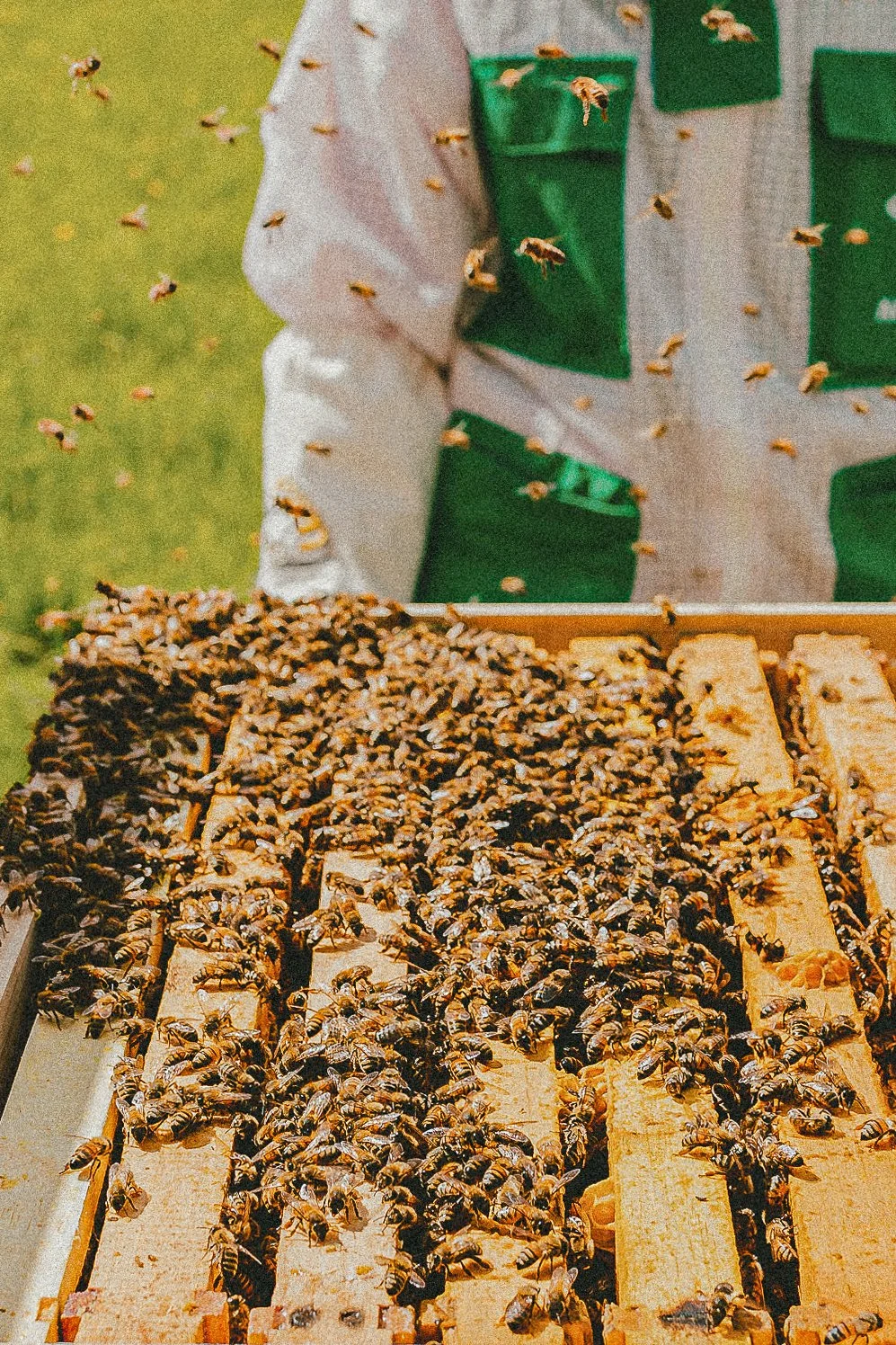
Sandra— the beekeeper I'd come to photograph — was already in her suit when I got there, methodically inspecting each box for damage. There is a particular pace to this work that I've come to recognize on every farm I've ever stood on.
You don't talk much. You move slowly. You let them tell you when they're ready.
That philosophy is at the heart of Apiverte. Based in the Gatineau Hills, Sandra’s work brings together business, agriculture, art, and community in support of honey bees. Her apiaries are part of a larger ecosystem — one that reaches across farms, forests, rivers, lakes, municipalities, and local partnerships. Apiverte now works across a 1500km² service area, with more than 20 commercial partner hosts, 30 apiary sites, and 125 colonies of honey bees.
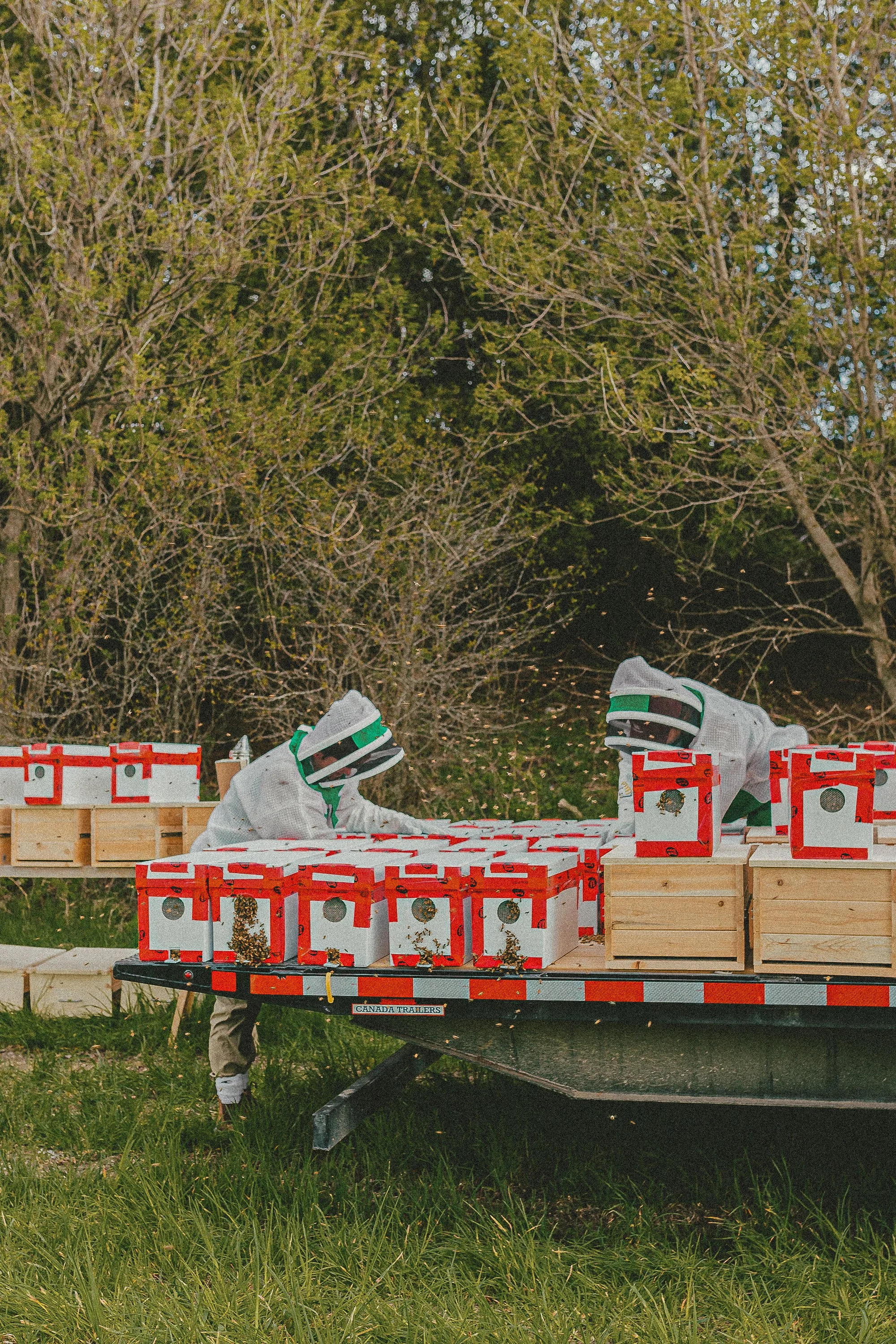
Sandra and her team inspecting boxes. Roughly 10,000 bees per box.
The work itself is magical. You pry open a box, you place the queen cage carefully on top of the new frames, and you let the remaining bees flow out and eventually down into the hive like they were water from a kettle. The bees know what to do. They have been doing this for sixty million years.
By the end of the morning the trailer was empty and the field was full. Each new colony took roughly twenty minutes to install — though "install" is the wrong word; you don't install bees, you invite them. Sandra walked between the rows of new hives with her smoker, tapping the lids, listening. The sound of the field was different now. A softer more settled hum.
I took photos for another hour while the colonies settled. Watching as the light moved across the rolling hills and curious bees swooped and buzzed in front of my lens. At one point a single worker bee landed on the back of my hand, sat there for nearly thirty seconds doing whatever a bee does when she is gathering information about a stranger, and then flew off without incident. A little bee welcome.
Apiverte’s honey is harvested often, in small batches, and only from one location at a time. This means each jar carries the character of where it was made — the flowers, forests, farms, and weather of that particular place. Honey from Chelsea is not quite the same as honey from La Pêche. A season of rain does not taste like a dry one. Every harvest is a kind of map.
That sense of place extends beyond the hives. Apiverte has collaborated with 25 artists across five municipalities, including Gatineau, Chelsea, La Pêche, Low, and Val-des-Monts. The goal is bigger than honey. It is awareness. Curiosity. Connection. A way of helping people see bees as essential participants in the life of a region.
A million bees is a useful number for a headline. The truer number is one bee — the one on your hand, holding still, deciding you are not a threat.
That is the heart of Apiverte’s work. One colony at a time. One habitat. One farm. One artist. One jar of honey carrying the flavour of a specific place.
Sandra calls it reinventing the honey beesness.
After a morning in the field with her, it feels less like a slogan and more like a promise.
